Use up and down arrow keys to resize the meta box pane.
Use up and down arrow keys to resize the meta box pane.
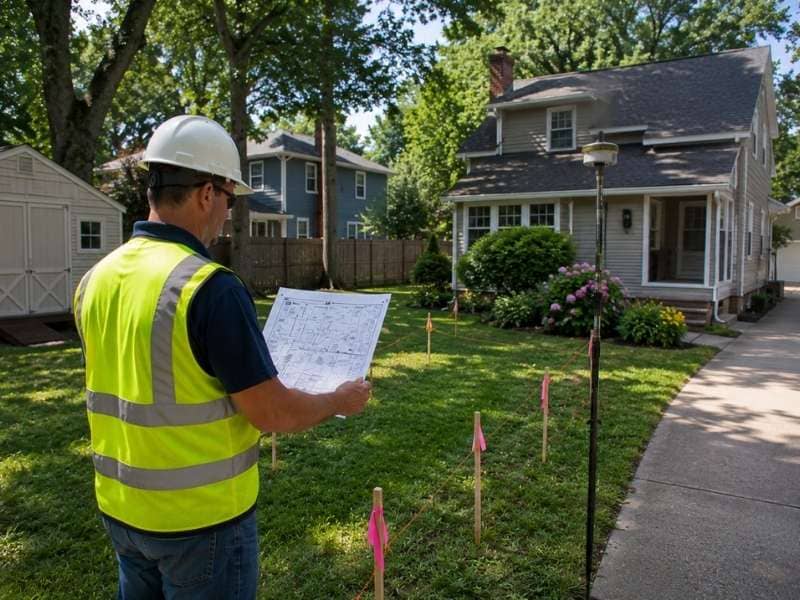
Most people think a survey starts when a crew shows up with equipment. It doesn’t. The real work begins at a desk, with records. A local surveyor reviews a stack of documents before setting foot on a property. Those documents shape every decision made in the field. In Miami, where older subdivisions, drainage easements and county records all interact, the document review is what separates an accurate survey from one that misses something important. This article explains exactly what gets reviewed and why it matters.
Use up and down arrow keys to resize the meta box pane.
Why Deeds and Legal Descriptions Come First
The deed is the starting point. It contains the legal description of the property, which is the written record of where the boundaries are supposed to be.
A legal description can take different forms. Some use metes and bounds, which describe the boundary as a series of directions and distances. Others reference a recorded plat, using lot and block numbers from a subdivision map. Both types tell the surveyor where to look for the property corners.
The problem is that legal descriptions are sometimes outdated, poorly written or in conflict with neighboring deeds. A description written 50 years ago may reference a monument that no longer exists. Two adjacent deeds may overlap slightly, creating a conflict the surveyor has to resolve.
Reading the deed carefully before fieldwork begins tells the surveyor what to expect on the ground. It also flags potential issues before they become costly surprises.
How Previous Surveys and Plat Maps Build the Property History
A deed tells you what the boundaries are supposed to be. An old survey shows you what a previous surveyor found when they went to locate them.
Previous surveys are valuable because they document where monuments were placed, what measurements were taken and how the boundary was interpreted at the time. If the current survey finds something different from what the old one shows, that difference has to be explained. It might mean a monument was disturbed. It might mean the earlier survey had an error. Either way, the comparison is useful.
Subdivision plat maps are equally important. In Miami, most residential lots are part of a recorded subdivision. The plat is the official map that established the lot dimensions, street widths and public areas when the subdivision was created. The local surveyor uses the plat to understand the original layout of the area and to find the monuments set when the subdivision was recorded.
When current field conditions don’t match the plat, the surveyor has to investigate why. Reviewing the plat before fieldwork starts means the surveyor already knows what to look for.
Easements, Rights of Way and Recorded Restrictions
A property boundary tells you where the land ends. It doesn’t tell you what can be done with all of it.
Easements are recorded rights that allow someone else to use a portion of the property. Utility easements let companies access underground lines. Drainage easements protect stormwater paths. Access easements may give a neighboring property the right to cross the lot.
Rights of way are similar. They reserve strips of land for roads, sidewalks or utilities. In some cases, a right of way runs along the front of a property and reduces the actual buildable area even though the owner holds title to that strip.
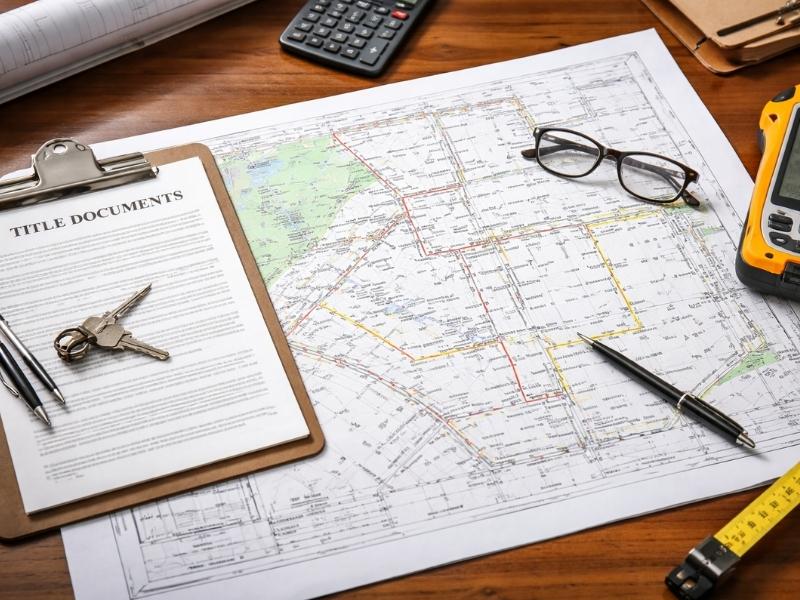
A local surveyor reviews title commitments, recorded easement documents and right of way plats before fieldwork begins. Those records show exactly where restrictions sit and how wide they are. That information affects where improvements can be placed and what gets shown on the final survey drawing.
Skipping this step leads to surveys that miss restrictions entirely. A developer who builds over an easement finds out during permit review or after construction starts, and neither timing is good.
Permit Records and Site Plans That Show Past Improvements
Properties change over time. Additions get built. Fences go up. Retaining walls get installed. Driveways get extended. Not all of those changes are permitted, and not all permitted changes match what was actually built.
A local surveyor reviews building permits, site plans and development records before fieldwork to understand what improvements are supposed to exist on the property. That information helps the surveyor identify features during the field visit and flag anything that doesn’t match the record.
In Miami, permit records are available through the city’s building department. Reviewing them before the survey starts gives the surveyor a baseline for what to expect. If a permit shows a fence was approved at a specific location but the fence in the field is three feet off from where it was supposed to go, that’s a discrepancy worth noting on the final drawing.
Retaining walls and utility connections are especially important. These features often affect drainage and grading. Knowing they exist before fieldwork starts means the surveyor can measure and document them properly rather than discovering them mid-survey.
Why County GIS Maps Are Only Part of the Story
County GIS maps, tax records and online parcel databases are useful tools. They give a quick overview of lot dimensions, addresses and ownership history. Many developers and homeowners check these resources before calling a surveyor.
The problem is that these tools were never designed to replace a professional survey. GIS data is compiled from recorded documents and aerial imagery, but it’s not survey-accurate. Parcel boundaries shown on a county map can be off by several feet. Property lines near canals, roads or subdivision boundaries are especially prone to misrepresentation in GIS data.
A local surveyor uses GIS maps and public records as background information. They provide context. They help the surveyor understand the general layout of an area before fieldwork starts. But the actual boundary positions are determined by field measurements tied to recorded plats and legal descriptions, not by what appears on a county parcel map.
Relying on GIS data alone to make building or permitting decisions is a shortcut that frequently causes problems. The county maps are helpful. They’re just not a survey.
Frequently Asked Questions
What documents does a local surveyor need before starting a survey?
A local surveyor typically reviews the deed, legal description, previous surveys, plat maps, easement records, and other public documents related to the property.
Why are previous surveys important?
Previous surveys provide historical information about boundaries, monuments, and improvements that can help identify discrepancies or changes over time.
Does a local surveyor review title documents?
Yes. Surveyors often review title commitments, easements, rights of way, and other recorded documents that may affect property use and ownership.
Are county GIS maps accurate enough for a survey?
No. GIS maps are useful reference tools, but they are not considered legal boundary documents and should not replace a professional survey.
Can missing or outdated records delay a survey?
Yes. Incomplete legal descriptions, missing plats, or conflicting records may require additional research before the surveyor can accurately establish property boundaries.