
↓
 

Miami Land Surveying

Local Land Surveyors in Miami, FL

Miami Florida Land Surveying
(305) 376-7707
Miami Land Surveying
  • Home
  • ALTA Survey
  • Boundary Surveying
  • Construction Survey
  • Drone LiDAR Mapping
  • Elevation Certificate
  • Land Surveying
  • Topographic Survey
  • About Us
  • Blog
  • Contact Us
Home→Tags land survey 1 2 >>

Tag Archives: land survey

Post navigation

← Older posts

What Documents Does a Local Surveyor Review Before Starting?

Miami Land Surveying Posted on June 26, 2026 by MiamiLSJune 23, 2026
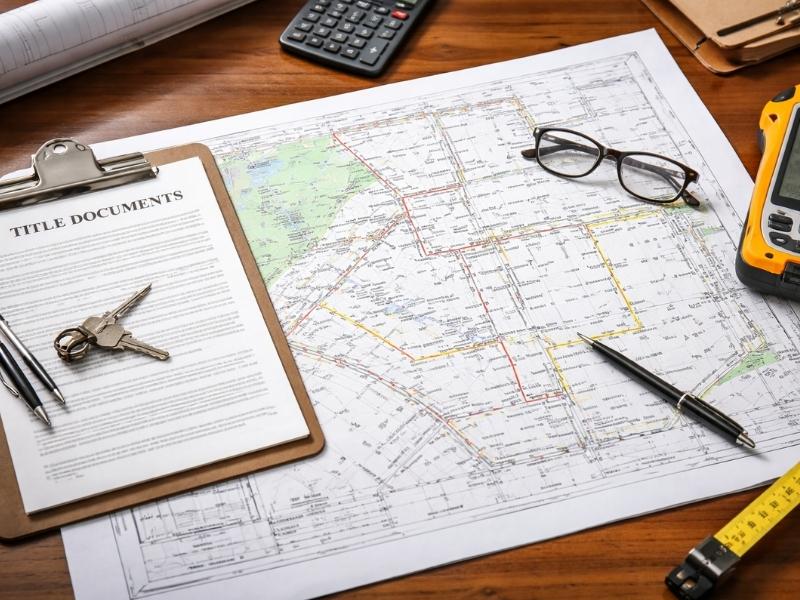
Local surveyor reviewing title documents, plat maps, and survey records before beginning field measurements on a property.

Use up and down arrow keys to resize the meta box pane.

Use up and down arrow keys to resize the meta box pane.

Most people think a survey starts when a crew shows up with equipment. It doesn’t. The real work begins at a desk, with records. A local surveyor reviews a stack of documents before setting foot on a property. Those documents shape every decision made in the field. In Miami, where older subdivisions, drainage easements and county records all interact, the document review is what separates an accurate survey from one that misses something important. This article explains exactly what gets reviewed and why it matters.

Use up and down arrow keys to resize the meta box pane.

Why Deeds and Legal Descriptions Come First

The deed is the starting point. It contains the legal description of the property, which is the written record of where the boundaries are supposed to be.

A legal description can take different forms. Some use metes and bounds, which describe the boundary as a series of directions and distances. Others reference a recorded plat, using lot and block numbers from a subdivision map. Both types tell the surveyor where to look for the property corners.

The problem is that legal descriptions are sometimes outdated, poorly written or in conflict with neighboring deeds. A description written 50 years ago may reference a monument that no longer exists. Two adjacent deeds may overlap slightly, creating a conflict the surveyor has to resolve.

Reading the deed carefully before fieldwork begins tells the surveyor what to expect on the ground. It also flags potential issues before they become costly surprises.

How Previous Surveys and Plat Maps Build the Property History

A deed tells you what the boundaries are supposed to be. An old survey shows you what a previous surveyor found when they went to locate them.

Previous surveys are valuable because they document where monuments were placed, what measurements were taken and how the boundary was interpreted at the time. If the current survey finds something different from what the old one shows, that difference has to be explained. It might mean a monument was disturbed. It might mean the earlier survey had an error. Either way, the comparison is useful.

Subdivision plat maps are equally important. In Miami, most residential lots are part of a recorded subdivision. The plat is the official map that established the lot dimensions, street widths and public areas when the subdivision was created. The local surveyor uses the plat to understand the original layout of the area and to find the monuments set when the subdivision was recorded.

When current field conditions don’t match the plat, the surveyor has to investigate why. Reviewing the plat before fieldwork starts means the surveyor already knows what to look for.

Easements, Rights of Way and Recorded Restrictions

A property boundary tells you where the land ends. It doesn’t tell you what can be done with all of it.

Easements are recorded rights that allow someone else to use a portion of the property. Utility easements let companies access underground lines. Drainage easements protect stormwater paths. Access easements may give a neighboring property the right to cross the lot.

Rights of way are similar. They reserve strips of land for roads, sidewalks or utilities. In some cases, a right of way runs along the front of a property and reduces the actual buildable area even though the owner holds title to that strip.

A local surveyor reviews title commitments, recorded easement documents and right of way plats before fieldwork begins. Those records show exactly where restrictions sit and how wide they are. That information affects where improvements can be placed and what gets shown on the final survey drawing.

Skipping this step leads to surveys that miss restrictions entirely. A developer who builds over an easement finds out during permit review or after construction starts, and neither timing is good.

Permit Records and Site Plans That Show Past Improvements

Properties change over time. Additions get built. Fences go up. Retaining walls get installed. Driveways get extended. Not all of those changes are permitted, and not all permitted changes match what was actually built.

A local surveyor reviews building permits, site plans and development records before fieldwork to understand what improvements are supposed to exist on the property. That information helps the surveyor identify features during the field visit and flag anything that doesn’t match the record.

In Miami, permit records are available through the city’s building department. Reviewing them before the survey starts gives the surveyor a baseline for what to expect. If a permit shows a fence was approved at a specific location but the fence in the field is three feet off from where it was supposed to go, that’s a discrepancy worth noting on the final drawing.

Retaining walls and utility connections are especially important. These features often affect drainage and grading. Knowing they exist before fieldwork starts means the surveyor can measure and document them properly rather than discovering them mid-survey.

Why County GIS Maps Are Only Part of the Story

County GIS maps, tax records and online parcel databases are useful tools. They give a quick overview of lot dimensions, addresses and ownership history. Many developers and homeowners check these resources before calling a surveyor.

The problem is that these tools were never designed to replace a professional survey. GIS data is compiled from recorded documents and aerial imagery, but it’s not survey-accurate. Parcel boundaries shown on a county map can be off by several feet. Property lines near canals, roads or subdivision boundaries are especially prone to misrepresentation in GIS data.

A local surveyor uses GIS maps and public records as background information. They provide context. They help the surveyor understand the general layout of an area before fieldwork starts. But the actual boundary positions are determined by field measurements tied to recorded plats and legal descriptions, not by what appears on a county parcel map.

Relying on GIS data alone to make building or permitting decisions is a shortcut that frequently causes problems. The county maps are helpful. They’re just not a survey.

Frequently Asked Questions

What documents does a local surveyor need before starting a survey?

A local surveyor typically reviews the deed, legal description, previous surveys, plat maps, easement records, and other public documents related to the property.

Why are previous surveys important?

Previous surveys provide historical information about boundaries, monuments, and improvements that can help identify discrepancies or changes over time.

Does a local surveyor review title documents?

Yes. Surveyors often review title commitments, easements, rights of way, and other recorded documents that may affect property use and ownership.

Are county GIS maps accurate enough for a survey?

No. GIS maps are useful reference tools, but they are not considered legal boundary documents and should not replace a professional survey.

Can missing or outdated records delay a survey?

Yes. Incomplete legal descriptions, missing plats, or conflicting records may require additional research before the surveyor can accurately establish property boundaries.

Posted in land surveying | Tagged land survey, Land Surveying, land surveying miami, land surveyor, land surveyor miami

What a Commercial Property Surveyor Checks Before Redevelopment Starts

Miami Land Surveying Posted on June 24, 2026 by MiamiLSJune 23, 2026
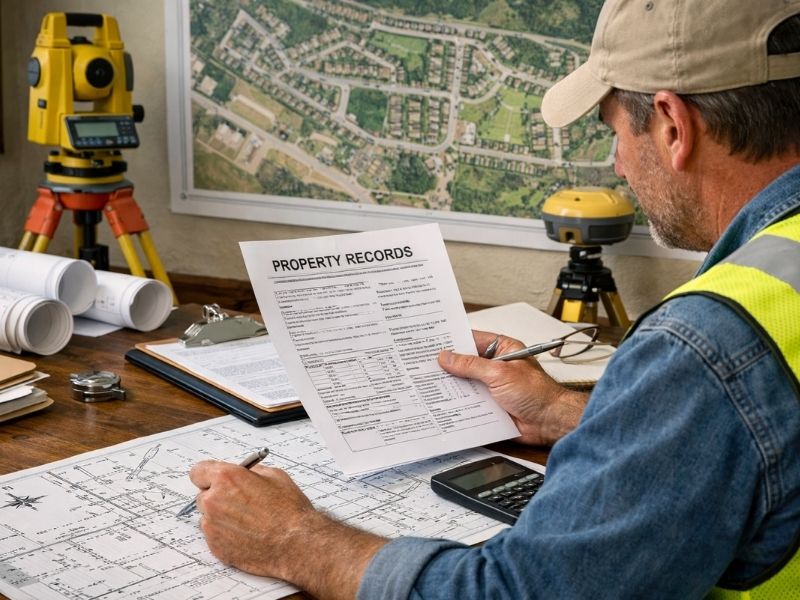
Commercial property surveyors using surveying equipment to document existing site conditions before redevelopment of a commercial property.

A redevelopment project can look simple from the outside. The building is old. The lot is large. The zoning works. Then a commercial property survey comes back with problems. An access easement cuts through the planned parking area. A retaining wall sits six inches over the property line. A drainage swale doesn’t show up on any old site plans. In Miami, older commercial properties carry decades of informal changes. Surprises are common. This article covers what a commercial property surveyor checks before work begins.

Existing Easements and Access Rights That Can Limit Redevelopment

Easements are recorded legal rights. They let someone else use part of your property. Utility easements let utility companies reach underground lines. Access easements may give a neighbor the right to cross your lot. Drainage easements protect stormwater systems that serve more than one parcel.

Easements don’t go away when a property changes hands. They stay with the land. A developer who buys a site without knowing where easements are may plan a building directly over a recorded utility corridor. The utility company won’t allow that. The permit office won’t approve the plans until the conflict is resolved. That means a redesign. Redesigns cost money.

A commercial property surveyor finds every recorded easement on the parcel. The surveyor maps each one onto the site. You can see exactly where the restrictions are before the design starts. The design team works around them early, not after the permit application is already in review.

Older commercial properties also carry shared parking and access agreements. These don’t always show up in a basic title summary. A surveyor who pulls the full chain of recorded documents gives the developer a clear picture before any commitments are made.

Boundary Line Conflicts Hidden by Older Improvements

Older commercial properties often have fences, walls and paving that were built without a survey. Over time, those improvements drift. A shared fence gets replaced slightly off its original spot. A curb gets poured past the legal boundary. A neighboring building gets expanded close to the line.

None of this shows up in a visual check. It only shows up when a surveyor compares the physical location of those improvements against the legal boundary.

This matters for redevelopment. The approved site plan must reflect the true legal property lines. If a wall on the next parcel sits inside your boundary, that changes how close you can build. If your own pavement extends past the line onto a neighboring lot, it has to be fixed before permits are issued.

In Miami’s older commercial areas, boundary conflicts are more common than most developers expect. Finding them before the design is done avoids the cost of revising plans after the permit review reveals the problem.

Site Features That Affect Demolition and New Construction

Before a commercial site can be redeveloped, someone needs to know what’s on it. That sounds simple. In practice, many commercial sites have underground structures, old drainage systems and utility connections that aren’t in any available record.

A commercial property surveyor documents all visible above-ground improvements. Buildings, canopies, paving, curbing, signage, utility structures, fencing and drainage inlets all get located and measured. That information feeds directly into the demolition scope and the new construction plans.

It also prevents costly surprises during demolition. A contractor who doesn’t know where an old vault or a buried utility line sits will find out during excavation. At that point, the discovery delays the project and changes the budget.

The survey creates a record of existing conditions. When the design team draws the new site plan over that record, they work with real data, not guesses.

Elevation Changes and Drainage Conditions That Affect Redevelopment Plans

Miami is flat. But flat doesn’t mean uniform. Commercial sites have grade changes that affect how water moves. Low spots collect runoff. Drainage structures direct flow toward outfall points. Pavement grades control whether water moves toward buildings or away from them.

A commercial property surveyor measures existing ground elevations. The surveyor also documents drainage features across the site. That information is essential for the engineer designing the new grading and stormwater system.

Miami-Dade County has post-construction stormwater rules for commercial redevelopment. The engineer must show the new site handles runoff correctly. That analysis starts with knowing what the existing conditions are. A survey that captures current grades, drainage inlets and outfall connections gives the engineer real numbers to work from.

Without that data, the stormwater design is built on guesses. Wrong guesses generate plan revisions. Plan revisions delay permits and push the construction start date back.

Encroachments and Setback Issues That Can Delay Approvals

An encroachment happens when a structure sits on land it doesn’t belong to. A wall that crosses the property line onto a neighbor’s parcel is an encroachment. So is a canopy that extends into a public right-of-way without a permit.

Setback violations happen when a structure sits too close to a property line. On older Miami commercial sites, some structures were legal under old rules. They may not meet current requirements. When a redevelopment permit is filed, reviewers check the survey against current setback standards.

If the existing building has a setback violation, the city may require the new project to fix it before the permit is approved. That can change the project scope and the budget.

Finding encroachments and setback conflicts before the design is drawn gives the developer options. Those options include negotiating with the neighbor, redesigning to avoid the conflict or adjusting the project scope. All of those conversations are far less expensive before the permit application goes in.

Frequently Asked Questions

What Does a Commercial Property Surveyor Do Before Redevelopment Starts?

A commercial property surveyor verifies property boundaries, documents existing site conditions, identifies recorded easements, and gathers the information engineers and architects need to prepare redevelopment plans accurately.

Why Is a Survey Needed Before Redeveloping Commercial Property?

A survey helps uncover hidden restrictions, boundary conflicts, drainage concerns, and encroachments. If these issues are discovered late in the process, they can delay permits and increase construction costs.

Can a Commercial Property Surveyor Find Easements on a Property?

Yes. A commercial property surveyor locates recorded easements and maps them onto the site. This allows the design team to understand where building restrictions apply before plans are finalized.

When Should a Commercial Property Survey Be Ordered?

A commercial property survey should be ordered during the due diligence stage, before architects and engineers complete the redevelopment plans. Identifying problems early helps keep the project on schedule and reduces the risk of costly revisions.

Can Boundary Problems Delay a Commercial Redevelopment Project?

Yes. Encroachments, setback violations, and conflicting property lines can require redesigns and additional review. When these issues are discovered late, they can delay approvals and significantly increase project costs.

Posted in land surveying | Tagged land survey, Land Surveying

What a Licensed Land Surveyor Can Legally Sign and Certify

Miami Land Surveying Posted on June 5, 2026 by MiamiLSJune 4, 2026
Licensed land surveyor reviewing property records and certified survey plans for boundary verification

Most developers know they need a survey before closing. Fewer know exactly what that survey must include to actually hold up legally. A licensed land surveyor can sign and certify specific documents, and only those documents carry legal weight for permits, lenders and title companies. Anything outside that scope is not a survey. It’s just a map.

What Makes a Land Surveyor Licensed

A land surveyor must hold an active Professional Surveyor and Mapper (PSM) license issued under Chapter 472 of the Florida Statutes. The Florida Department of Business and Professional Regulation (DBPR) issues and tracks these licenses.

Getting a PSM license requires:

  • A degree in surveying and mapping from an accredited program
  • Several years of supervised field experience
  • Passing the Fundamentals of Surveying exam
  • Passing the Principles and Practice of Surveying exam

You can verify any surveyor’s license status for free through the DBPR online database. The license number must also appear on every certified document the surveyor produces. If it’s not there, the document is not legally valid.

What a Licensed Land Surveyor Can Legally Sign

Boundary Survey

A licensed land surveyor can sign and certify a boundary survey. This is the document that shows the exact legal limits of a parcel. It reflects deed research, physical monument locations and field measurements.

A certified boundary survey is the only document a title company will accept to remove boundary-related exceptions from a title policy. It’s also what most building departments require before issuing a permit for new construction or additions.

Elevation Certificate

A licensed land surveyor can sign and certify a FEMA Elevation Certificate. This document records the elevation of a structure relative to the Base Flood Elevation (BFE) on the FEMA Flood Insurance Rate Map.

Lenders require it on properties in Special Flood Hazard Areas. Insurance companies use it to set flood insurance premiums. Without a PSM signature, FEMA does not recognize it as valid.

ALTA/NSPS Land Title Survey

A licensed land surveyor can sign and certify an ALTA/NSPS Land Title Survey. This is the survey type commercial lenders and title companies require on income-producing properties and larger transactions.

It follows a national standard set jointly by the American Land Title Association (ALTA) and the National Society of Professional Surveyors (NSPS). The surveyor must certify that the survey meets those standards on the face of the document. No PSM signature means no valid ALTA survey.

Subdivision Plat

A licensed land surveyor must sign and seal every subdivision plat before it can be recorded with the county. Florida Statutes Chapter 177 requires this. The plat creates the legal lots, streets and easements that form a subdivision. A county will not record a plat without a PSM seal.

Topographic Survey

A licensed land surveyor can sign and certify a topographic survey. This document maps the elevation and physical features of a site. Engineers and architects use it for grading, drainage and site design.

Construction Survey Documents

A licensed land surveyor can certify construction staking records and as-built surveys. These confirm that structures were placed where the approved plans required.

What a Licensed Land Surveyor Cannot Do

This matters as much as what they can do.

A PSM license does not authorize a surveyor to:

  • Give a legal opinion on title or ownership
  • Appraise land value
  • Practice civil engineering without a separate PE license
  • Provide legal advice on deed disputes or boundary litigation
  • Issue zoning opinions or land use determinations

If a boundary dispute ends up in court, the surveyor can testify about measurements and deed interpretation. They cannot act as the property owner’s attorney. The two roles don’t overlap.

Some surveyors also hold a Professional Engineer (PE) license. When that’s the case, they can certify engineering documents under that separate license. But the PSM license alone doesn’t cover it.

Why the Signature Matters to Developers

Permits Won’t Move Without It

Most local building departments require a survey signed and sealed by a licensed PSM before they’ll issue a permit. A sketch, a GIS printout or an unsigned drawing doesn’t satisfy that requirement. The permit application stalls until a certified survey is submitted.

Lenders Check the Seal

Commercial lenders review the surveyor’s license number and certification language before approving a construction loan. If the survey comes from an unlicensed provider, the lender’s underwriting team will reject it. That stops the loan.

Title Companies Rely on the Certification

When a title company issues a policy without boundary exceptions, they’re relying on the surveyor’s professional certification. The surveyor is legally responsible for the accuracy of the document. That’s what gives the certification its weight. An uncertified document gives the title company nothing to stand on.

How to Confirm a Surveyor’s License Before You Hire

Three steps. Takes five minutes.

  1. Ask the surveyor for their PSM license number before signing anything.
  2. Go to the Florida DBPR website and search the license database by name or number.
  3. Confirm the license is active and has no disciplinary history.

If the license is expired, suspended or shows a recent complaint, stop the conversation. Hire someone else. A survey signed by a lapsed PSM has no legal standing and will be rejected by permits, lenders and title companies.

Frequently Asked Questions

What does a licensed land surveyor legally certify?

A licensed Professional Surveyor and Mapper (PSM) can legally certify boundary surveys, elevation certificates, ALTA/NSPS land title surveys, subdivision plats, topographic surveys and construction survey documents. Each certified document carries the surveyor’s license number and professional seal, which gives it legal standing for permits, title insurance and lender review.

Can a licensed land surveyor give a legal opinion on a boundary dispute?

No. A PSM can testify about measurements, deed calls and survey findings, but they can’t provide legal advice or title opinions. That falls under the practice of law. If a boundary dispute escalates, you need a real estate attorney alongside the surveyor’s certified documentation.

What happens if a survey isn’t signed by a licensed surveyor?

It has no legal standing. The building department won’t accept it for a permit. A lender won’t accept it for a loan. A title company won’t use it to remove exceptions from a policy. The document is effectively useless for any official purpose.

Does a PSM license cover engineering work?

No. A PSM license covers surveying and mapping only. A surveyor who also holds a Professional Engineer (PE) license can certify engineering documents, but only under that separate PE license. The two licenses cover different scopes of work and can’t be substituted for each other.

How do I verify a land surveyor’s license is active?

Search the Florida Department of Business and Professional Regulation (DBPR) online license database. You can search by the surveyor’s name or license number. The result shows whether the license is active, expired or has any disciplinary actions on record. Always check before hiring.

Posted in land surveying | Tagged land survey, land surveying miami, land surveyor, licensed land surveyor

Post navigation

← Older posts
Get Quote Button

Select Your City

  • Aventura
  • Coral Gables
  • Cutler Bay
  • Doral
  • Hialeah
  • Homestead
  • Miami Beach
  • Miami Gardens
  • Miami Lakes
  • North Miami
  • North Miami Beach

The owner of this website, USA Surveying & Engineering, LLC., provides coordination of professional land surveying and engineering services in all 50 states. The professional surveying and engineering services provided to you will be conducted by fully licensed professionals in your state.

Privacy Policy | Terms of Use
↑