Before you break ground, you need to find your property lines. Not after permits. Not during construction. Before anything starts.
A wrong assumption about where your land ends can kill permits, delay closings and spark lawsuits that drag on for years. Most developers skip this step until it’s already a problem.
Here’s how to do it right.
What Are Property Lines?
Property lines are the legal edges of your land. They control what you can build, where you can build it and how close you can get to the edge of your parcel. For developers, these lines affect setbacks, zoning compliance and easement restrictions. Getting them wrong doesn’t just mean paperwork problems. It can mean forced demolition.
4 Ways to Find Your Property Lines
There are four methods developers use to locate property lines. Each has a different level of accuracy, and only one holds up in court.
1. Start With Your Property Deed
Your deed contains the legal description of your land. That description is what a surveyor uses to locate your boundaries in the field.
Most legal descriptions use one of two formats:
- Metes and bounds: traces the boundary using distances and compass directions from a starting point
- Lot and block: points to a recorded plat map with assigned lot numbers
The deed alone won’t show a line on a map. But it’s the foundation for every method that follows. Get a copy from your county recorder’s office or title company.
2. Pull the Recorded Plat Map
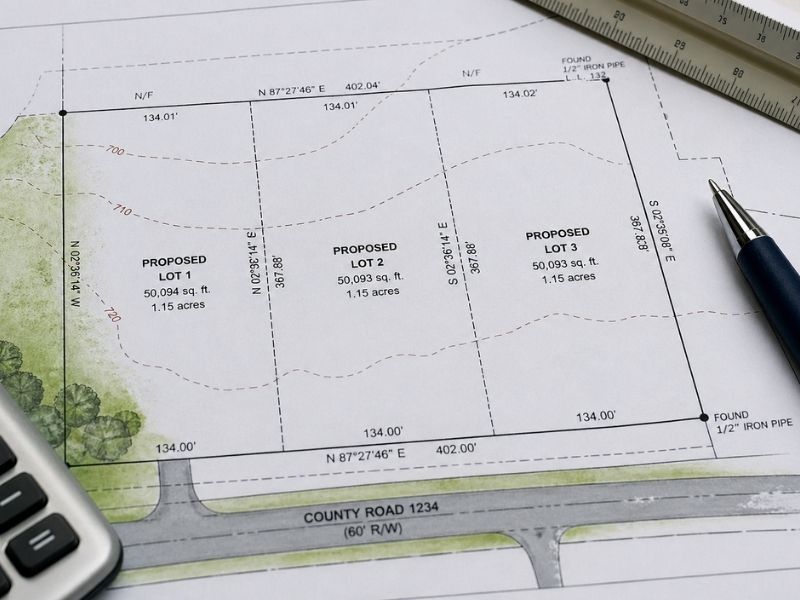
If your site is part of a subdivision, a plat map was recorded when the land was originally divided. That map shows lot dimensions, easements and rights-of-way for the entire subdivision.
You can usually find plat maps through:
- Your county’s property appraiser website
- The county clerk or recorder’s office
- Your title insurance documents
Plat maps are a good starting point. They’re not reliable for field decisions, especially on older properties where monuments may be missing or shifted.
3. Look for Physical Survey Markers
When a boundary survey is completed, the surveyor sets physical monuments at each property corner. If those are still in place, they mark your actual boundary on the ground.
Common markers include:
- Iron rods or pipes in the ground, sometimes capped with the surveyor’s license number
- Concrete monuments flush with the surface
- Survey stakes with flagging tape, usually from a recent active survey
Don’t assume every stake you find is accurate. Contractors and fencing crews disturb or remove them all the time. Always verify what you find with a professional before making any site decisions.
4. Use County GIS Mapping Tools
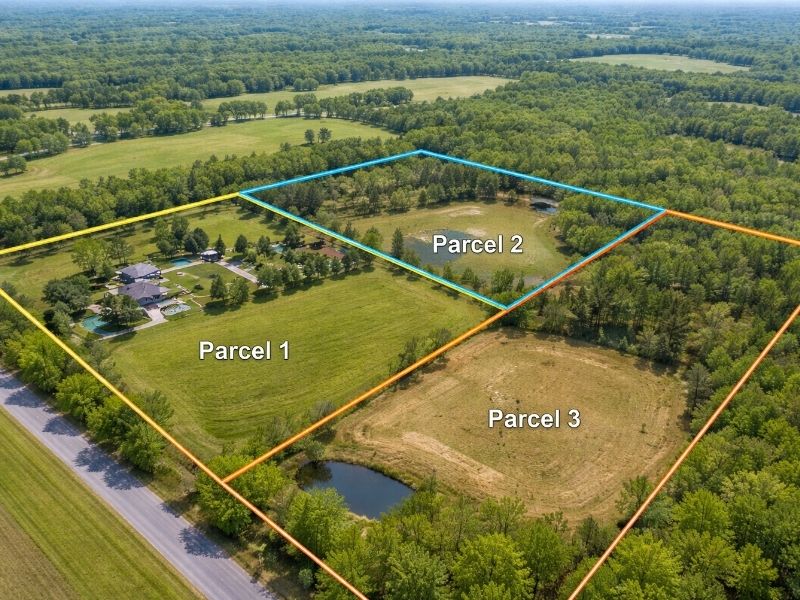
Most countries offer free online GIS tools that display parcel boundaries over aerial imagery. These are useful for a quick visual check during early planning.
But GIS maps carry a real margin of error. They’re digitized from older records and can be off by several feet. In older urban areas, that gap can reach 10 feet or more.
Use them for general reference. Never rely on them for legal or construction decisions.
When You Need a Licensed Surveyor
For any development project, a professional boundary survey is the only method that holds up legally. A licensed surveyor will research deed records and prior surveys for your parcel, locate existing monuments in the field, measure and calculate exact boundary positions, set new monuments where old ones are missing and produce a legal drawing you can submit to the county or lender.
If your project involves permits, financing or construction near a boundary, don’t skip this step. Most lenders require a survey before closing. Most building departments require one before issuing permits.
What Can Go Wrong Without a Survey
Developers who skip the survey tend to run into the same problems.
Encroachments. A structure, fence or paved area that crosses the line. This can kill a deal or force a costly removal after construction is done.
Setback violations. Without knowing your exact boundary, you can’t calculate setbacks correctly. A violation can stop a permit or require tearing down work you’ve already paid for.
Easement conflicts. Easements give others the legal right to use part of your land. Building on one creates serious legal exposure that won’t go away at closing.
Title problems. If your survey doesn’t match the deed description, your title coverage may not protect you.
Fixing any of these after construction costs far more than a survey would have before it.
Frequently Asked Questions
Can I find my property lines for free?
Partly. You can check your deed, pull a plat map or use a county GIS tool at no cost. But none of these give you a legally accurate boundary. For construction or disputes, you need a licensed land surveyor.
How accurate are online GIS maps for property lines?
GIS parcel maps are digitized from older records. In many counties, they can be off by 5 to 10 feet or more. They’re useful for planning purposes only.
What is a boundary survey?
A boundary survey is a professional measurement of your property’s legal limits. A licensed land surveyor researches deed records, locates monuments in the field and produces a legal drawing showing exact boundary positions.
How long does a boundary survey take?
Most residential boundary surveys take 1 to 3 weeks from the date of hire. Larger or more complex parcels take longer. Rush surveys are sometimes available for an added cost.
Do I need a survey if I already have a plat map?
A plat map shows the original recorded layout of a subdivision. It doesn’t reflect what’s physically on the ground today. For any development work, a field survey is still required to confirm current conditions.