
Why Finding Property Lines Online Is Not Enough
Most developers check property lines online before breaking ground. It feels fast. It feels easy. But it can stop a project before it starts.
Free mapping tools look accurate. They’re not.
Here’s what those tools miss, why it matters for your project, and what actually holds up when permits and legal disputes come into play.
What Online Property Line Tools Actually Show You
Online tools display general boundary data. That data comes from public tax records and old deed descriptions. It’s not field-verified. It has not been measured on the ground by a licensed surveyor.
The Source Problem
Most online maps pull from two places:
- Tax parcel databases
- Digitized plat maps
Tax parcels are drawn for billing purposes. They’re not legal boundary descriptions. Digitized plats lose accuracy every time they’re scaled, scanned or uploaded. A line that looks correct on screen can be off by several feet in the field.
For a residential homeowner, that might not matter much. For a developer building to setback lines or planning a multi-unit structure, a few feet can kill the whole project.
Why the Data Goes Out of Date Fast
Property boundaries change. Lot splits happen. Easements get recorded. Boundary line adjustments get approved. None of these updates hit online tools right away. Some never do.
A county GIS map might reflect a parcel as it was recorded 15 years ago. The legal description in the deed may have been amended since then. If your project relies on what the map shows today, you could be building on assumptions that no longer match reality.
What a Survey Finds That a Map Cannot
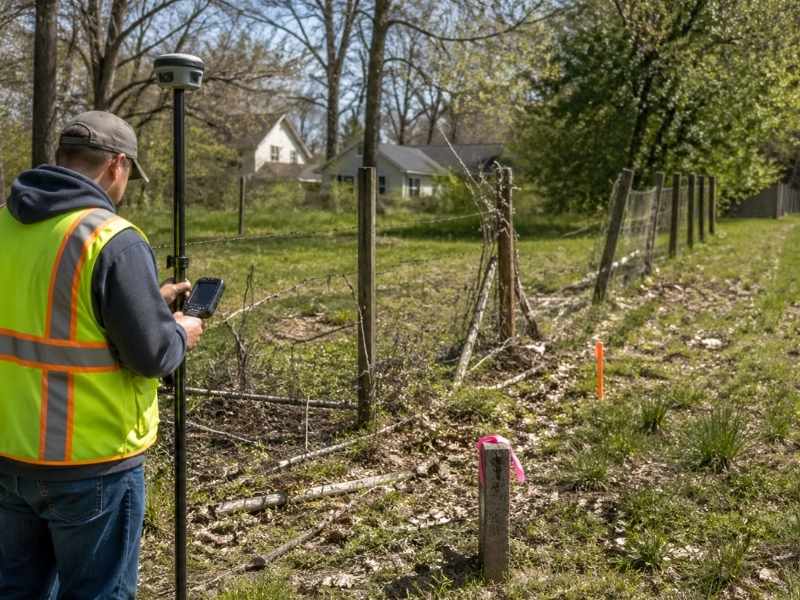
A licensed land surveyor doesn’t rely on digitized data. They research the chain of titles. They locate physical monuments in the field. They measure distances and compare them against recorded deeds and plats.
When they find a conflict between what the map shows and what exists on the ground, that conflict gets flagged before construction starts. That’s the point. Online tools don’t do that.
The Legal Weight of Online Data Is Zero
This is the part most developers learn the hard way.
A screenshot of a county GIS map means nothing in a permit review. It doesn’t satisfy the title company. It won’t hold up in a boundary dispute. No city building department will accept it as proof of where your property ends.
Only a survey signed and sealed by a licensed land surveyor carries legal weight. That’s not a formality. That’s the difference between a permit getting approved and a stop-work order showing up on your jobsite.
What Can Go Wrong Without a Survey
Here are the most common problems developers run into when they skip the survey and rely on online data:
- Encroachments: A structure, fence or paving gets built over a property line. The neighboring owner files a complaint. The project gets delayed or partially demolished.
- Setback violations: The building gets placed too close to a property line based on an inaccurate boundary. The permit gets denied or the structure has to be moved.
- Easement conflicts: A utility or access easement runs through the planned construction area. Nobody caught it because the online map didn’t show it.
- Title issues: The title company finds a gap between what was built and what the legal description shows. The loan doesn’t close.
Each of these problems costs more to fix than a survey would have cost upfront.
What You Should Use Instead
Before any development project moves forward, get a boundary survey from a licensed land surveyor. For commercial transactions, an ALTA survey gives you the most complete picture. It covers boundary lines, easements, encroachments and other matters that affect the land.
If you’re dealing with flood zones or elevation requirements, an elevation certificate from a licensed surveyor gives you data that holds up with FEMA and your insurance provider.
Online tools are fine for a first look. They’re not fine for making construction or investment decisions. The moment money is on the line, get a survey.
Frequently Asked Questions
Can I use Online Apps to find my property lines?
Online apps show general parcel outlines. That data comes from public tax records and isn’t field-verified. It can be off by several feet. It has no legal standing for permits, title work or boundary disputes.
Are county GIS maps accurate enough for construction?
No. County GIS maps are useful for general reference. They’re not updated frequently enough to reflect recent lot splits, easements or boundary adjustments. A licensed surveyor verifies lines on the ground using current recorded documents.
What’s the difference between a tax parcel map and a legal boundary survey?
A tax parcel map is used for billing and assessment. It’s not a legal description of your property. A boundary survey is prepared by a licensed land surveyor, verified in the field and legally recognized for permits, title and construction.
How often do property lines change?
Lines change when lots are split, consolidated or adjusted by recorded agreement. Easements also get added or modified over time. Online maps often don’t reflect these changes, sometimes for years after they happen.
When does a developer actually need a boundary survey?
Before any site plan is prepared. Before permits are pulled. Before a construction loan closes. If you’re buying land to develop, get the survey before you buy, not after.
