
What to Look for When Hiring a Land Surveyor
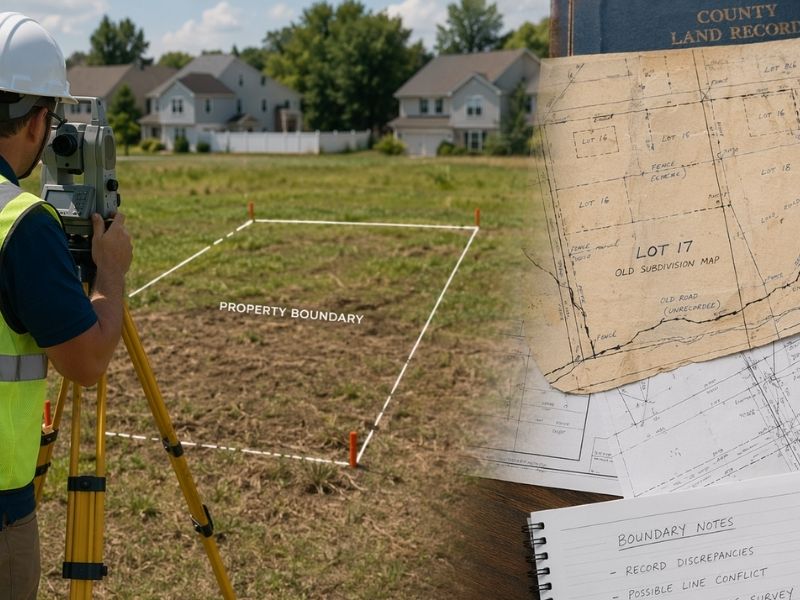
When hiring a land surveyor, most developers get one quote, maybe three, then pick the lowest. That decision costs more than they expect.
A bad survey doesn’t just need correcting. It can void permits, create title problems and spark boundary disputes that stop a project cold. The money saved on the cheap hire won’t cover what comes next.
Here’s what to check before you sign anything.
Why This Hire Is Different
A survey carries legal weight. It gets recorded. Lenders rely on it. Title companies base coverage decisions on it. When something is wrong, fixing it mid-project is expensive and slow.
Most contractors can be swapped out if things go sideways. A surveyor’s work is already filed with the county before you realize there’s a problem.
What to Look for When Hiring a Land Surveyor
1. Confirm They Hold an Active State License
Every state requires land surveyors to be licensed. Before anything else, verify the license is current and valid in the state where your project sits.
Most state licensing boards have a free public lookup tool online. Use it. The license number should also appear on every official survey drawing they produce. If someone won’t give you that number upfront, stop the conversation there.
2. Match Their Experience to Your Project Type
Land surveying covers a wide range of work. A firm that handles residential lot splits all day may not be the right fit for an ALTA/NSPS survey your commercial lender requires. Someone who specializes in topographic surveys may not have deep experience with construction staking.
Ask directly: what types of surveys do you do most often? If your project type isn’t the bulk of their work, keep looking.
3. Ask How Much They Know Your County
When you search for land surveyors near me, local knowledge is exactly what you’re paying for.
This matters more than most developers expect. County records vary. Older plats can be inconsistent. Local municipalities have their own quirks around how they handle permits, easements and right-of-way documentation.
A surveyor who knows your county well spots problems faster. They know which records are digitized and which require a physical records search. They know the local examiners. That familiarity saves real time on complex projects.
Ask how many projects they’ve completed in your specific county. A vague answer usually means not many.
4. Get the Full Scope in Writing Before You Hire
Before you authorize any work, know exactly what you’re getting and when.
Your written scope should cover:
- The type of survey being performed
- What the final survey package includes (signed and sealed drawing, CAD files, written report)
- The turnaround time from authorization to delivery
- What can extend that timeline and what happens when it does
A professional surveyor should answer all of this without hesitation. Vague answers at the quote stage are a preview of how the job will run.
5. Ask for Proof of E&O Insurance
E&O stands for errors and omissions. It’s professional liability coverage that protects you if a mistake in the survey causes financial damage to your project.
Ask for a certificate of insurance before signing. Any reputable firm will provide it without pushback. If they can’t, that’s not a firm worth hiring.
6. Call References From Similar Projects
Ask for two or three references from projects that match your scope in type and size. Then call them.
Ask whether the survey came back on time. Ask whether what they received matched what was promised. Ask whether any problems came up and how the firm handled them. One honest conversation with a past client tells you more than any sales pitch.
Red Flags That Should End the Conversation
Some problems aren’t obvious from a license check. Watch for these:
A quote that’s far below everyone else. Low quotes usually mean something is missing from the scope, the timeline is unrealistic or research time is being cut. You’ll find out which one it is after you’ve already paid.
Slow communication before the contract is signed. If they’re hard to reach now, they’ll be harder to reach when you’re waiting on a drawing that’s holding up your permit.
No clear answer on what the final survey includes. A professional knows exactly what they’re producing. Hesitation here is a real problem.
No license number or E&O insurance provided. These are non-negotiable. Walking away is the right call.
Questions to Ask Every Surveyor You Vet
Run through this list before hiring anyone:
- Are you currently licensed in this state? What’s your license number?
- What types of surveys do you do most often?
- How much work have you done in this county?
- What exactly will I receive when the job is complete?
- How long will this take from authorization to delivery?
- Do you carry E&O insurance? Can I see proof?
- Can you provide references from projects similar to mine?
Short, direct answers are what you’re looking for. A surveyor who stumbles on these questions is probably not ready for your project.
Frequently Asked Questions
How do I verify a land surveyor’s license?
Search for your state’s board of professional land surveyors online. Most maintain a free public database where you can confirm a license is active and in good standing. The license number should also appear on any official survey drawing the firm has produced.
Does a lower quote mean lower quality?
Often, yes. Low quotes usually reflect cuts in research time, field work or what’s included in the final package. A survey error that requires a correction, or that causes a permit rejection, will cost more to fix than the difference between quotes.
What is E&O insurance and why do I need it?
E&O is professional liability insurance. It covers financial losses caused by errors in the surveyor’s work. If a boundary call is wrong and it affects your project, E&O coverage is how you recover damages. Always ask for proof before you sign a contract.
Do I need a different surveyor for different project types?
Not always, but the experience match matters. An ALTA/NSPS survey required by a commercial lender has different standards than a simple boundary survey for a lot split. Make sure the firm regularly completes the specific type of survey your project requires.
How long does a land survey take?
Most standard surveys take 1 to 3 weeks from authorization. ALTA surveys and larger commercial projects take longer because of the added research and field work involved. Get a written timeline before you hire and ask what can cause it to slip.
