
What a Topographic Survey Means for Construction

A construction project looks simple at first. A piece of land seems flat enough, and plans feel ready to go. Then problems show up once digging starts. Water does not flow the right way. The ground is uneven. A building design does not match the land. These issues often come from skipping one key step, the topographic survey.
A topographic survey shows the real shape of the land. It maps height changes, slopes, trees, roads, and anything built on the site. Because of this, engineers and builders can see what they are really working with before any design or construction begins. Without it, plans rely on guesses, and guesses can get expensive fast.
This is why a topographic survey plays a major role in construction and site design. It gives a clear picture of the land so projects can move forward with fewer surprises.
What a Topographic Survey Shows
A topographic survey measures the land in detail. It does not just show property lines. Instead, it shows the full shape of the ground.
Surveyors record things like hills, slopes, low areas, and flat sections. They also mark features such as roads, fences, buildings, trees, and drainage paths. In many cases, they use tools like GPS equipment, drones, or laser mapping to collect accurate data.
After the field work, all this data turns into a map. That map helps engineers understand how the land behaves. So, instead of guessing where water might flow or how soil will move, they can see it clearly.
This step becomes the base for every design decision that follows.
Why Construction Projects Depend on It
Construction projects depend on a topographic survey because land is never perfectly flat, even when it looks that way.
When builders skip this step, problems often show up later. A building may sit too low or too high compared to the road. Water may pool near foundations. Driveways may end up too steep or uneven.
With a topographic survey, engineers can plan around these issues early. They adjust building height, drainage paths, and grading plans before work begins. As a result, the project runs smoother and avoids redesigns.
It also helps with permits. Many cities and counties require accurate site data before approving construction plans. So having a topographic survey ready can speed up approvals and reduce delays.
How It Helps in Site Design
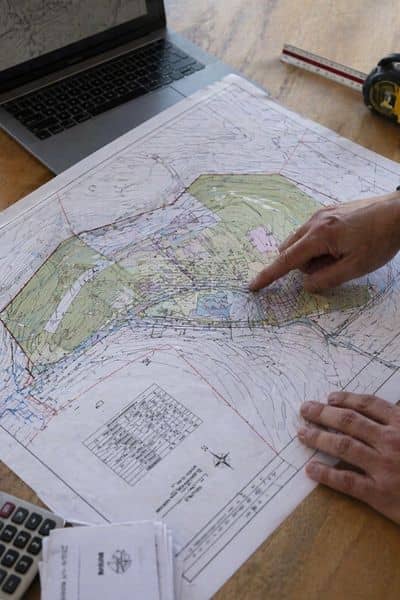
Site design depends on accurate ground information. A topographic survey gives that information in a clear way.
For example, architects use it to place buildings in the safest and most stable areas. Engineers use it to design drainage systems so water flows away from structures. Road designers use it to plan smooth access points that match the slope of the land.
It also helps with utility planning. Water lines, sewer systems, and electrical routes all depend on ground levels. If the slope is wrong, systems may not work properly.
Because of this, the survey becomes the starting point for design. Without it, every design choice becomes a risk.
What Happens When It Is Skipped
Skipping a topographic survey can cause serious problems during construction.
One common issue is drainage failure. Water may flow toward buildings instead of away from them. This can lead to flooding or foundation damage.
Another issue is grading mistakes. Contractors may discover that the land is steeper or flatter than expected. This leads to extra excavation work and higher costs.
Design changes also become more likely. If the original plan does not match the land, engineers must revise drawings. This slows down the project and increases expenses.
In some cases, permits get delayed or rejected because the site information is not accurate enough. So what seemed like a small shortcut can turn into a major setback.
Who Needs a Topographic Survey
A topographic survey is not only for large construction companies. Many different people and projects need it.
Home builders use it before starting a new house. Developers use it for subdivisions and commercial sites. Engineers rely on it for infrastructure projects like roads and utilities. Even homeowners may need it before building retaining walls, driveways, or additions.
Any project that changes the land depends on understanding the ground first. Because of that, a topographic survey becomes a standard step in planning.
When You Should Get One
Timing matters. A topographic survey works best when done early in the project.
It should happen before design work begins. This gives architects and engineers accurate data from the start. It should also happen before permit applications, since many authorities require it.
In addition, it should be done before any grading or land clearing. Once the land is changed, the original shape is lost, and planning becomes harder.
When done at the right time, the survey saves both time and money throughout the project.
How Surveyors Create It
Surveyors start by visiting the site. They walk the land and collect measurements using GPS tools, laser scanners, or drones. These tools help capture small changes in elevation and surface detail.
After collecting data, they process it into a map or digital model. This model shows contours, which are lines that represent different heights on the land.
The final product may come as a digital file or printed map. Engineers then use it for design work and planning.
Even though the process sounds technical, the goal is simple. It turns real land into clear information that people can use.
Cost Factors to Expect
The cost of a topographic survey depends on a few things.
Large properties take more time to measure, so they cost more. Rough or wooded land also takes longer to survey. In addition, complex sites with many features require more detail, which adds to the cost.
Location can also affect pricing. Some areas need more detailed mapping due to regulations or terrain conditions.
Even so, the cost of a survey is small compared to the cost of fixing design mistakes later.
Topographic Survey Compared to Other Surveys
A topographic survey is often confused with other types of surveys, but they are not the same.
A boundary survey focuses on property lines. It shows where land starts and ends. A construction survey focuses on marking where structures will be built. A topographic survey focuses on the shape of the land itself.
Because of this, many projects use more than one type of survey. Each one serves a different purpose, but the topographic survey usually comes first in the planning stage.
Final Thoughts
A topographic survey gives builders, engineers, and designers a clear view of the land before work begins. It shows slopes, features, and elevation changes that are easy to miss at first glance. Because of that, it helps prevent design errors, construction delays, and unexpected costs.
When used early, it supports better planning and smoother projects from start to finish.
Without it, construction decisions rely on guesswork. With it, every step has a solid foundation built on real site data.
